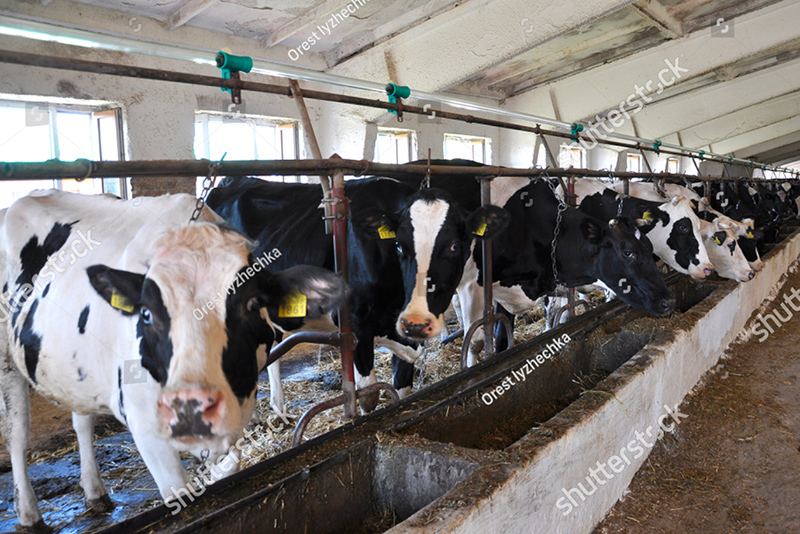
The well-being of dairy-cows, otherwise known as cow comfort, guarantees living conditions and management strategies that take into account and respect their space and physiological needs in all stages of life.
Animal Welfare was given importance in scientific and legal terms after the Brambell Report in 1965, which was commissioned by the British government and which indicated, for the first time, the following Five Freedoms for the welfare of farmed animals:
- Freedom from hunger and thirst and from poor nutrition.
- Freedom from discomfort by providing appropriate housing conditions.
- Freedom from pain, injury and disease.
- Freedom for animals to express normal and appropriate behaviour typical of their species.
- Freedom from fear and distress
By guaranteeing these five freedoms to our animals, we can ensure that they become ill less frequently, reproduce at the right speed and frequency and produce as much as their genetic make up allows them as well as their feedback to the way we manage them.
50 Nutrition with unifeed, under the constant supervision of professional feed-consultants, will in most cases respect full nutritional requirements on all levels. A critical aspect of animal nutrition in most barns is the availability of drinking water. Leaving the quality of water aside, (we could cover the topic of quality in an entire chapter alone), insufficient access to water troughs presents the most challenging issue. Experts nowadays recommend a minimum of 10 cm to an ideal of 15 cm of frontal access space per cow in lactation to be divided into at least two watering stations in each barn.
Trough hygiene is one of the basic criteria for animal well-being given that cows have similar tastes to humans and increase water consumption when the troughs and tanks are emptied daily and cleaned and sanitized (with hypochloride or peracetic acid) at least once a week.
It is a fact that milk is made up of 85-87% water and that the daily drinking requirement is around three litres of water per litre of milk produced, or five litres per kilo of dry matter ingested. Furthermore, we also know that during the summer months this may double on the hottest days. An adequate supply of water and easily accessible watering stations on the animals’ return from the milking parlour is known as «cheap milk», a term invented by American cow-comfort experts.
One of the main causes of distress in dairy cows is known as «heat stress», which is made worse by climate change and global warming (the “tropicalization” of the climate in southern Europe) and by the increasing productive trends of breeds in modern dairies which are the cause of an increase of their metabolic heat. Fortunately, science has made great advances in reducing the negative impact of excessive heat levels on animals, allowing cows to reach similar levels of production and reproductive performances in the summertime as those during the winter the winter.
Great progress has also been achieved in the prevention of many diseases, with the use of new vaccines (for example, for mastitis) and in the application of health protocols for cleaning and sanitation in different areas of livestock housing and farming. Improvement has also occurred in laboratory techniques and methods of screening and monitoring, for example in PCR (polymerase chain reaction) testing, previously available only for diagnosis in human medicine.
The dairy cow is an extremely generous animal. We can be sure that if we offer her the right living conditions respecting the above mentioned freedoms, she will be able to express her full genetic potential, leaving us amazed by her marvellous productive and reproductive ability.